Sensory Overload Mechanics Deep Dive
Why deaths feel fair — and why the tunnel keeps you retrying.
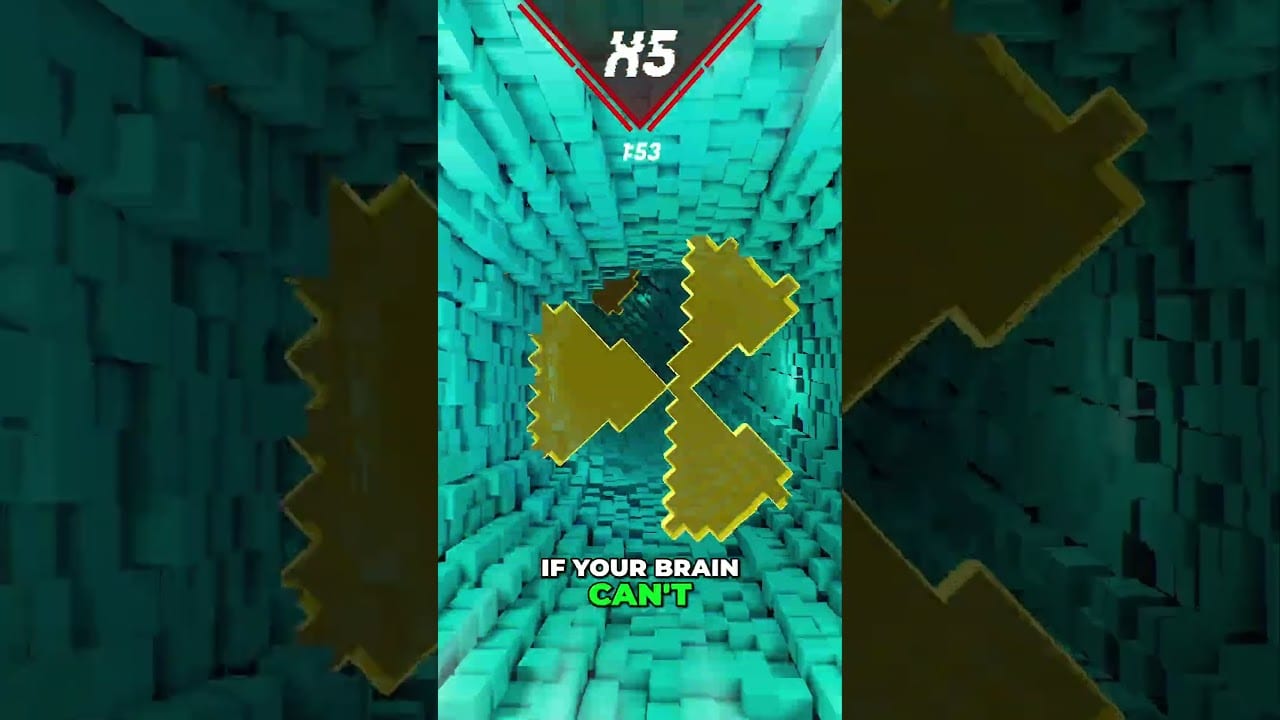
Under the viral aesthetics, Sensory Overload is an engineering argument about fairness at absurd speed. Developer Tim Berce (Pancak3s) has explained the core bets in interviews: a mathematically perfect point instead of chunky colliders, mouse-forward control for precision, deterministic levels, and an ultra-fast death-to-respawn loop. This page translates those bets into player-facing implications.
Practical movement habits still live in How to Play and Controls.
Point collider fairness
Berce describes dropping traditional colliders so you play as an infinitely small point. Larger hit volumes produced deaths players labeled unfair. At dropper speeds, a mathematically thin avatar keeps near-misses honest and leaderboards meaningful.
Player takeaway: if a death felt random, ask whether you misread a tell — not whether the hitbox secretly grew. Then label the death on Vertigo or Apocalypse vocabulary.
Mouse movement as the precision path
The design moved away from pure WASD-style strafing toward mouse movement for control. That does not delete keyboard or controller support — Steam Deck and pads remain part of the audience — but it explains why micro-corrections feel more like aiming than holding A/D.
Update your mental model:
- Prefer fine mouse adjustments over long keyboard holds
- On controller, treat stick flicks like micro-aim
- Re-read Controls after each major patch
Deterministic levels and learning
Levels are built so deaths teach. The same geometry returns; your pattern library grows. That is why observation runs matter more than rage resets. Practice Mode extends the idea with checkpoints.
One-more-try loop
Berce’s stated pillars:
- Visually stimulating fantasy
- Extremely fast death-to-respawn
- Deterministic routes that feel beatable
This loop is powerful and dangerous. Pair it with Comfort Checklist stop rules so the design cannot outrun your vestibular system.
Audio-visual sync as feedback
Color schemes and beat maps were iterated for intensity versus fairness. Clean play can reward you with stronger music-synced visuals. Failures often look noisier than they are — slow down with Zen when the reward layer becomes a distraction.
Effect combinations
Pre-launch messaging cited thousands of possible effect combinations across levels targeting different senses. Campaign names like Vertigo, Nausea, Peristalsis, and Apocalypse are teaching labels for those stacks. Use the Difficulty Tier List to queue practice.
What this means for Ranked
Ranked Mode inherits the same fairness thesis under earlier escalation. If Ranked feels “random,” your failure labels are probably incomplete — not the point collider betraying you.
Related reading
- Accessibility Settings for readability tools that keep fairness intact
- Level Editor if you author maps that respect determinism
- Patch Notes for renderer and QoL changes that affect perceived fairness
Mechanics literacy turns superstition into drills. Drill the tunnel; do not mythologize it.
Death taxonomy that matches the engine
Label deaths the way the design expects:
- Read fail — tell was visible; you looked at the wrong place
- Input fail — tell was read; correction was late or held too long
- Comfort fail — vestibular lock; pause was the correct input
- Hardware fail — hitch, invisible geometry, wrong aspect — fix Tools first
Mixing these labels creates superstition (“the game hates me”) that the point collider deliberately tries to prevent. Keep a three-line death log during Practice Mode blocks.
Why speed amplifies fairness debates
At slow speeds, chunky colliders feel fine. At dropper speeds, a few pixels of volume become narrative. Interviews emphasize the mathematical point because near-miss culture and leaderboards collapse if players believe hitboxes inflate under load. When a patch changes renderer behavior, re-validate your assumptions via Patch Notes before blaming skill regression.
Transfer into authored maps
If you open the Level Editor, inherit the same bets: deterministic routes, readable tells, and death-to-retry that respects attention. Random invisible spikes fight the thesis this page describes.
Transfer into Ranked psychology
Ranked inherits Normal’s geometry language under earlier escalation. Your job is not to invent new physics — it is to keep the death taxonomy honest while adrenaline rises. Warm up with mouse micro-flicks from Controls, then enter Ranked only after two clean Normal validations.
Comfort as a mechanical constraint
The one-more-try loop is a designed addiction curve. Treating comfort stops as “soft” ignores that vestibular failure ends learning the same way a crash does. Pair this deep dive with Comfort Checklist so the loop stays a teacher instead of a trap.
Mechanics are promises. Hold the game to them, and hold yourself to readable practice.
Frequently Asked Questions
Quick answers for demo and launch questions.
Is movement mouse-only?
Design emphasis moved toward mouse precision, but controller and Deck play remain supported. Check your build’s bindings in Controls.
Why do near-misses matter to fairness?
A point-sized avatar keeps grazing honest. Larger volumes historically felt unfair to playtesters.
Are levels RNG?
Core teaching levels are deterministic so deaths educate. Ranked escalation changes pacing, not the fairness thesis.